Rethinking Human Connections Through the Spread of Social Gifting as a Means of Expressing Gratitude
With the spread of social media and the impact of the covid crisis, the way people interact with each other is changing sizably. As the way people interact with each other has changed, the way they gift “presents (gifts)” and the purposes why they do so are also changing. (Presents (gifts) will be referred to as “gifts” below) Traditionally, gifts were given customarily given periodically such as o-seibo year-end gifts, or gifts to celebrate anniversaries. However, “chocolate for friends” appeared on the scene in around 2000, and are being mutually given among friends to express one’s feelings and appreciation for friends as a more casual way to convey one’s appreciation. In addition, other new forms of gifts have also appeared including “gift cards” that come in a variety of designs and seasonal limited editions, which were first offered by Starbucks Coffee in 2002, and “digital gift cards” that can be casually gifted, such as Amazon Gift Cards, which were first released in 2007. The spread of social media has also increased the opportunities to meet people from far away or places unclear to us, so the use of digital gifts has spread* as a means to casually convey one’s feelings of gratitude and amidst the restrictions on meeting people in-person amidst the covid crisis. This article examines the state of “social gifts”, a new digital gift format.
Social gifts: Services and platforms enabling users to casually give gifts to family, friends, and acquaintances via email or social media through simply sharing a URL (they can be sent without knowing the person’s address, and no shipping procedures are needed either)
*The number of people who have ever used social gifts has increased +10.0% since the advent of the covid crisis (Online Gift Research Institute survey)
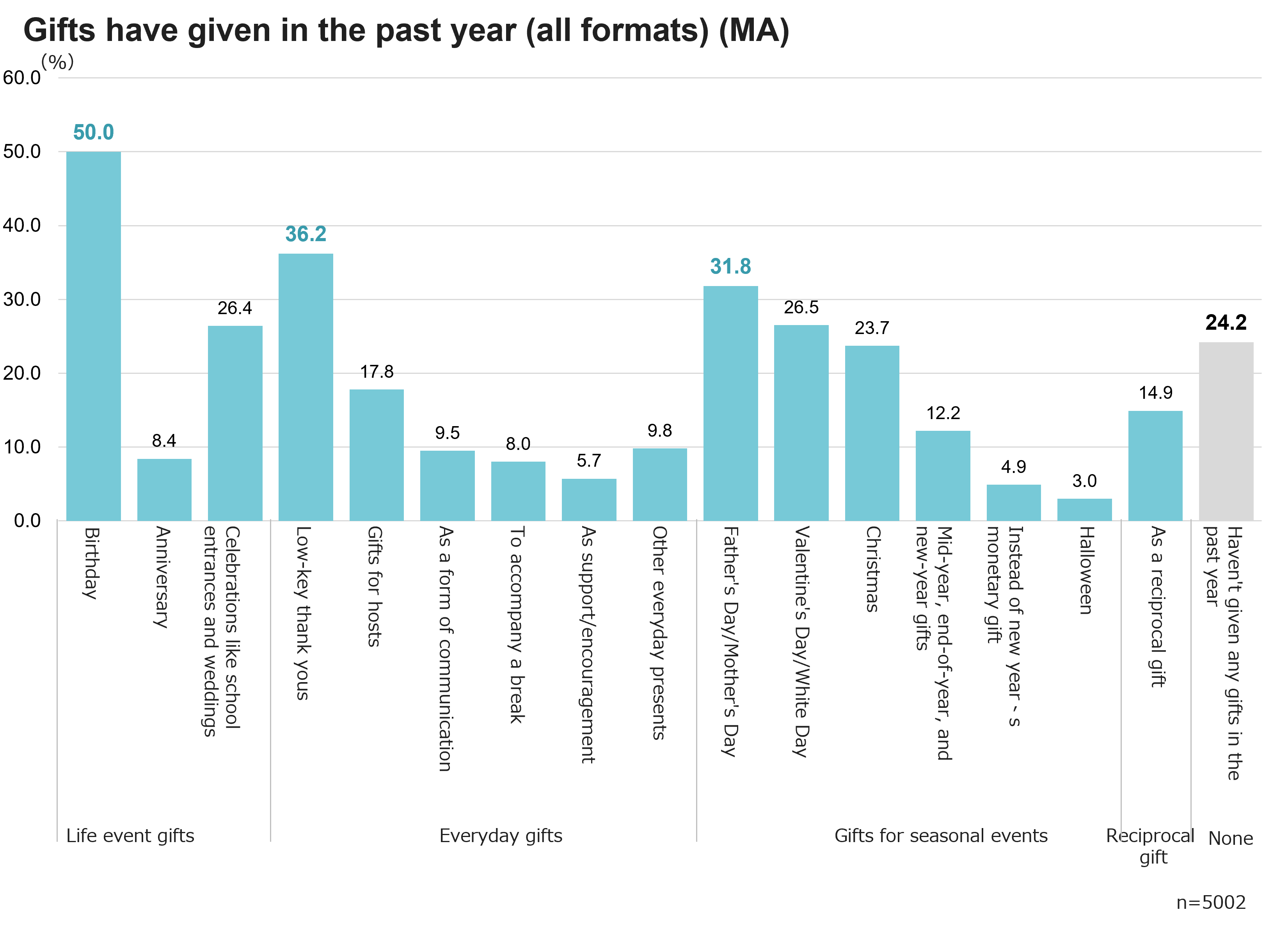
Firstly, Diagram 1 depicts the results of a survey on gifts (all formats) given in the past year. We classified them into the three following categories based on gifting situation to examine respectively. 1)Life event gifts (for celebrations like birthdays, anniversaries, school entrances, and weddings) 2)Everyday gifts (low-key thank-yous, gift for a host, as a form of communication,…) 3)Gifts for seasonal events (Father’s Day, Mother’s Day, Valentine’s Day,…)
Fig.1
The most common situation was “birthday presents”, classified as a “life event gift” at 50.0%. This was followed by “low-key thank-yous” classified as an “everyday gift” at 36.2%, then “Father’s Day/Mother’s Day presents” classified as a “gift for seasonal events” at 31.8%. Since 24.2% of people have not given gifts in the past year, 3/4 of consumers have given some kind of gifts in various situations. Consumers utilize gifts in a large number of situations in which they interact with others.
2. Social gift awareness and usage experience
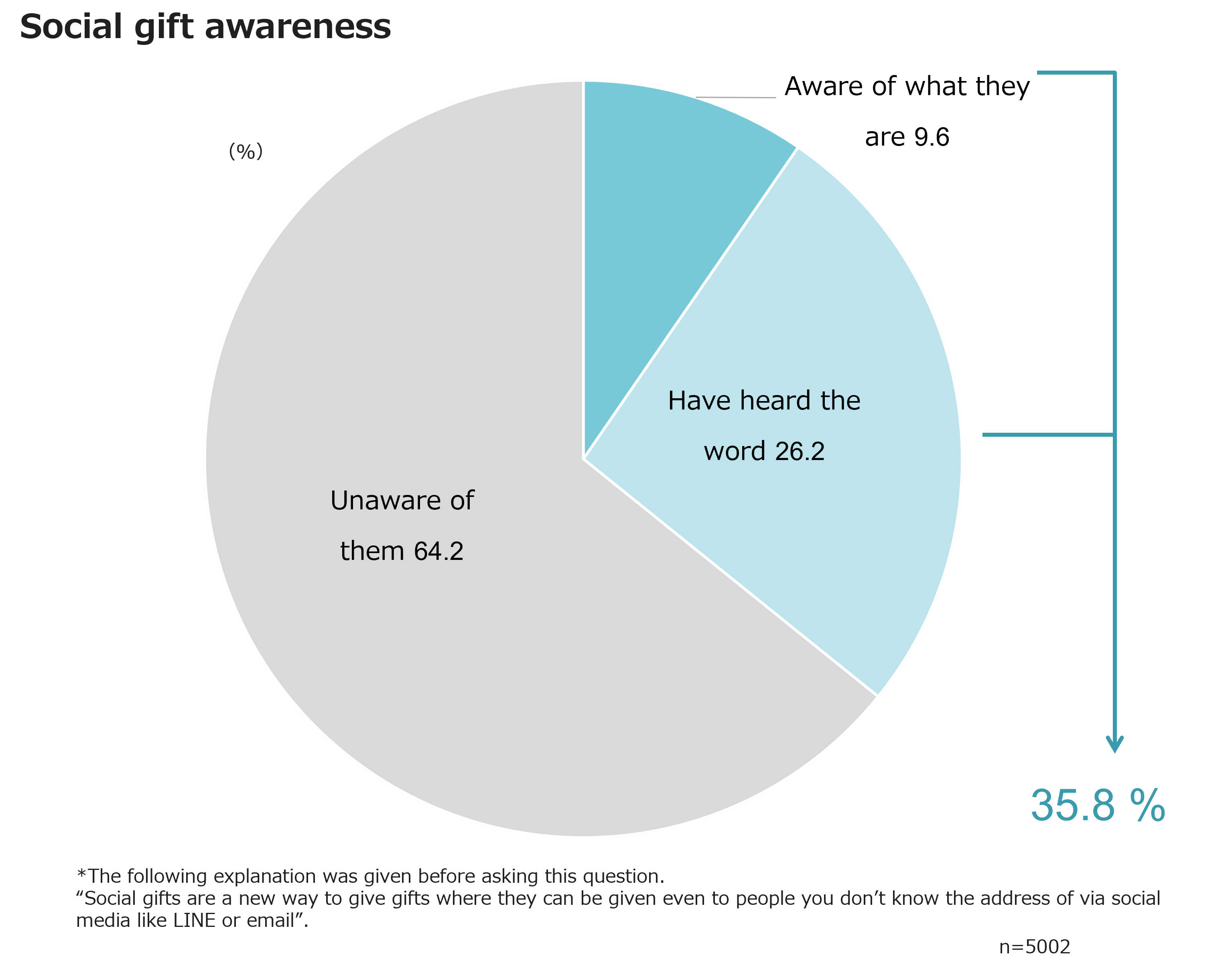
Awareness of social gifts, a new gift format, is still low, with 9.6% “Aware of what they are”, and 26.2% “Have heard the word”, with awarers of the term social gifts a low 35.8% in total. On comparison by gender, awareness among males was 32.2%, and among females was 39.6%, with female awareness of the term some 7.4 points higher.
Fig.2
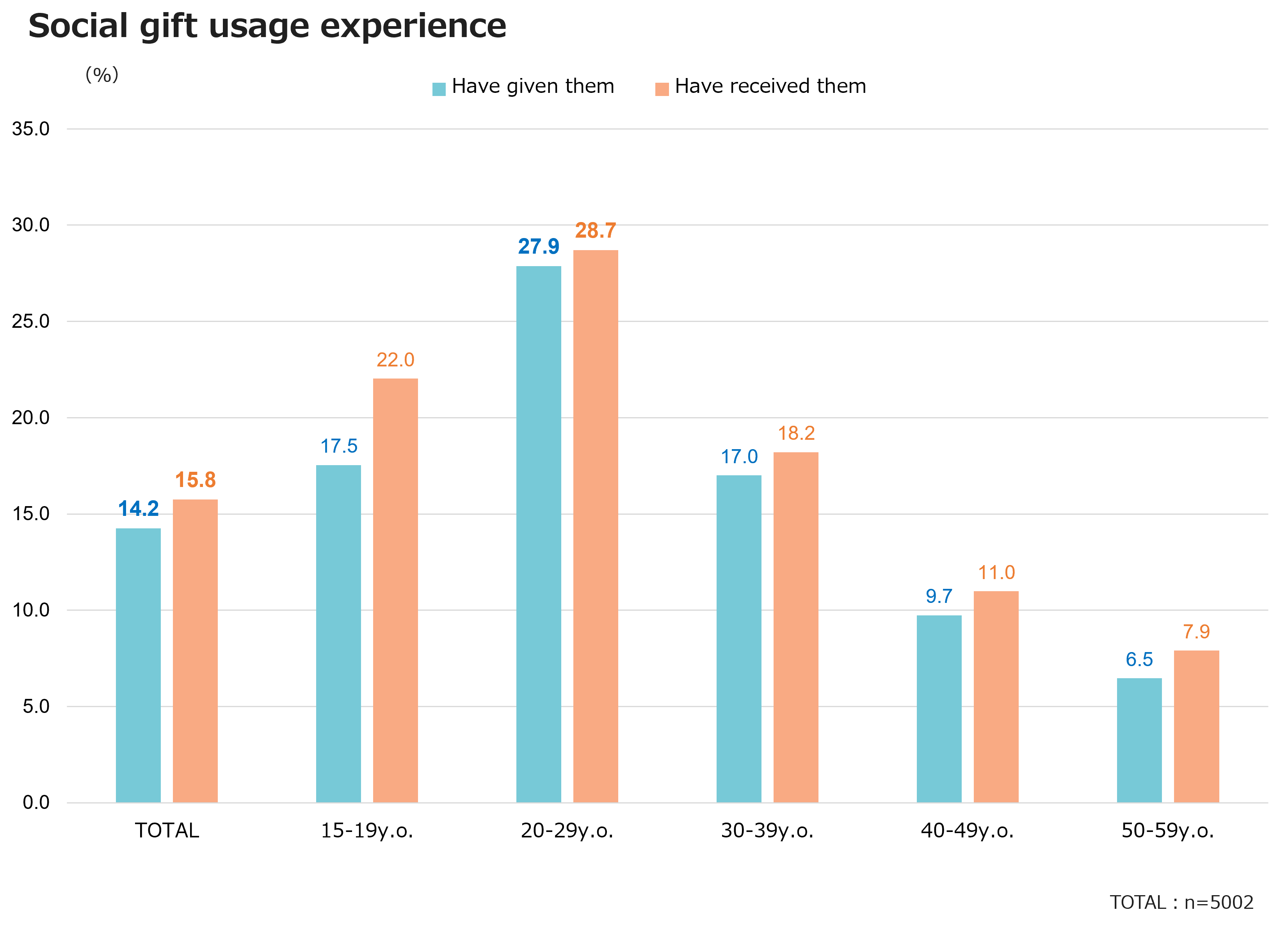
Next, Fig.3 summarizes the percentage of people who have given or received social gifts in the past, broken down by age group.
Fig.3
Among the Total, 14.2% “Have given them” and 15.8% “Have received them” social gifts. On observation by age group, 27.9% of those aged 20 ~ 29 “Have given them”, and 28.7% “Have received ” social gifts, indicating people in their 20s utilize social gifts the most in terms of both gifting and receiving them. Young people are assumed to thus casually express their thanks by using “social gifts”.
3. Social gift characteristics
Comparison of gifting situations
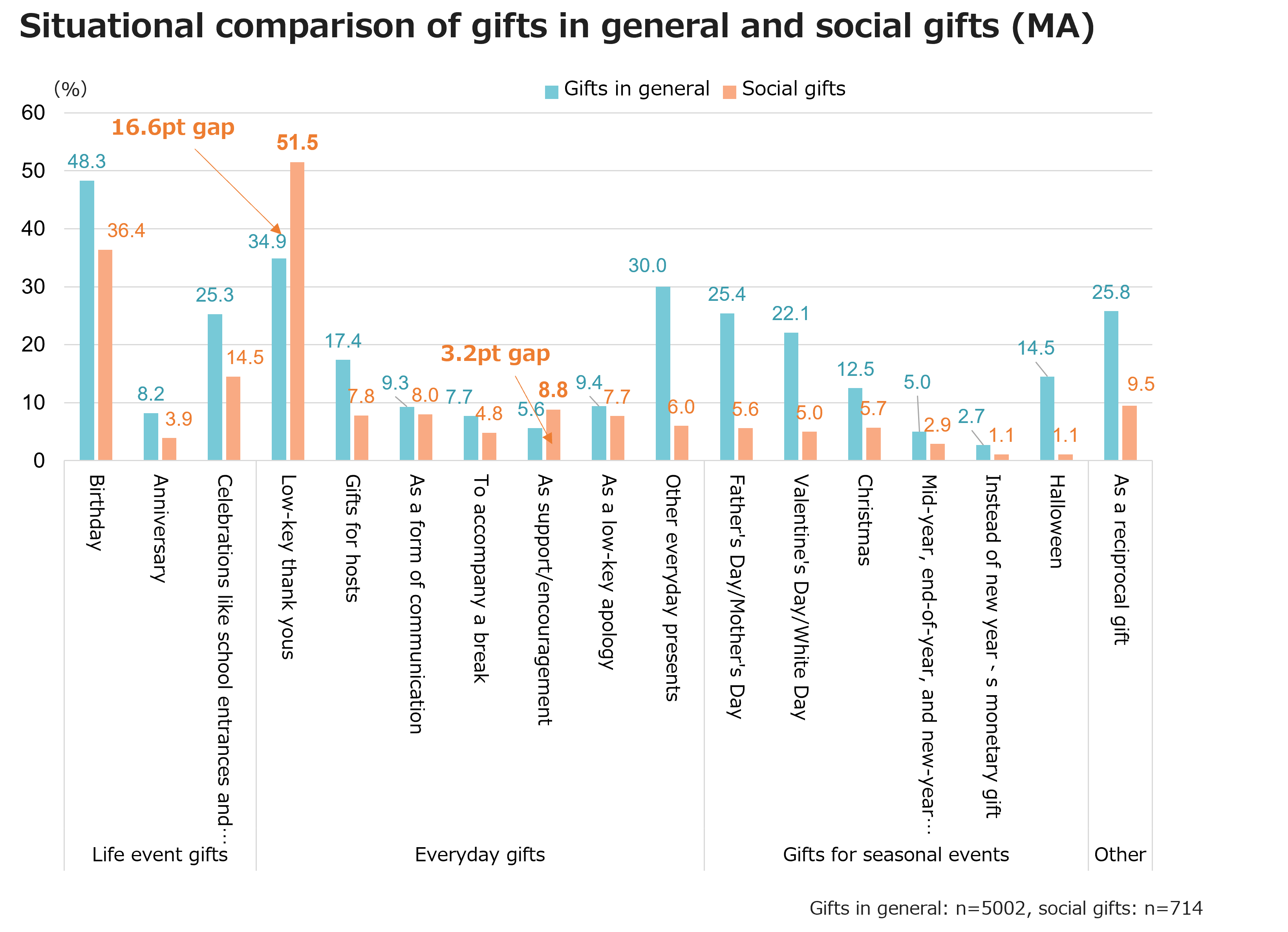
Fig.4 depicts the difference between the situations where gifts are given in general, and those where social gifts are given.
Fig.4
The situations where social gifts are given more than gifts in general are “low-key thank-yous” at 51.5% (some 16.6 points ahead of gifts in general), and “as support/encouragement” at 8.8% (some 3.2 points ahead of gifts in general). It is thus apparent that social gifts are often used when consumers want to convey sentiments at low-key moments in daily life, rather than sending them in set situations like for events or anniversaries.
Social gifts they have given / they would be happy to receive
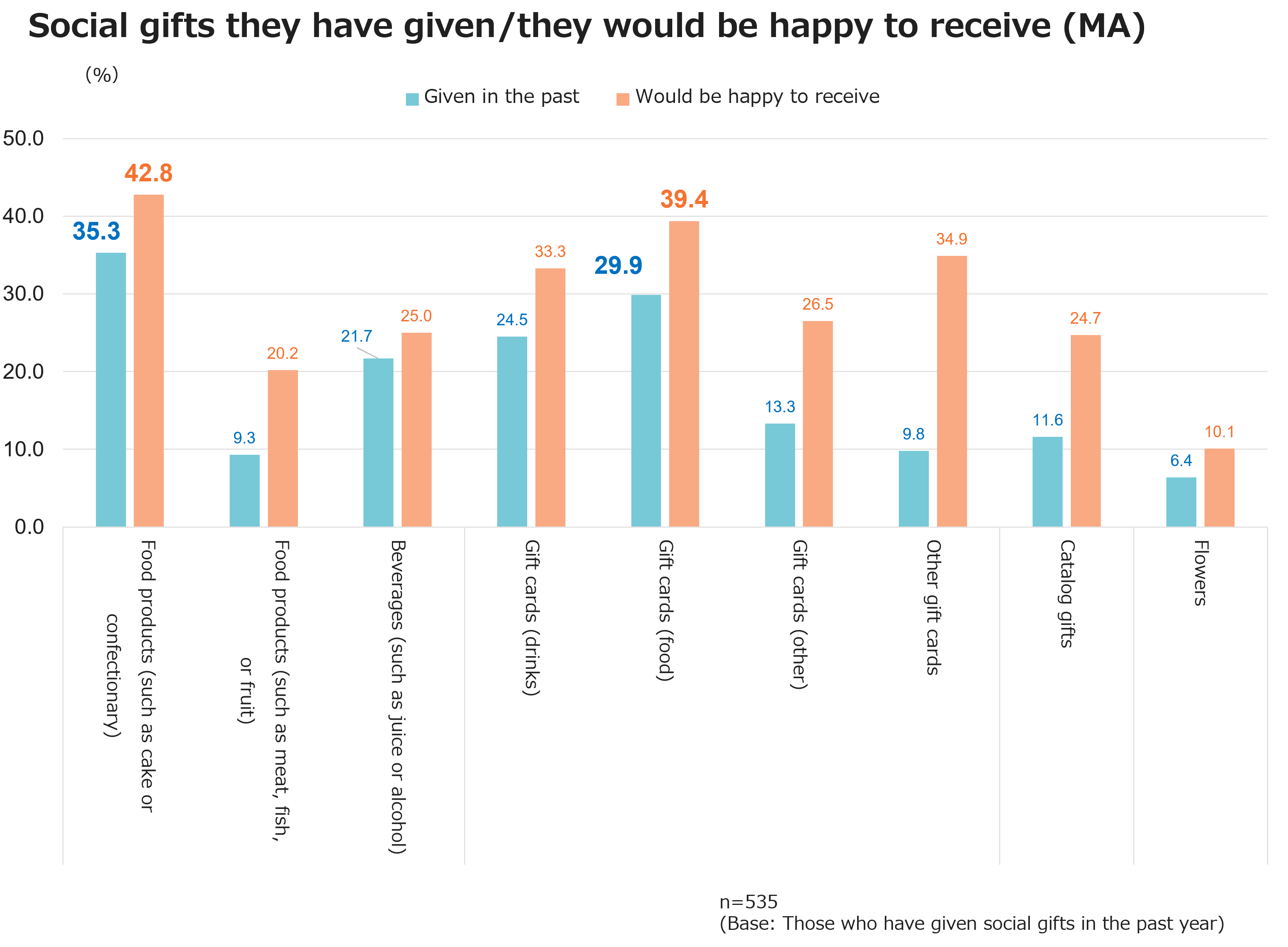
The top “social gift given in the past” was “Food products (such as cake or confectionary)” at 35.3%, then “Gift cards (Food)” at 2nd place at 29.9%, with food products thus ranking top. The top “social gift they would be happy to receive”, akin to first place on the “gifts given in the past”, was “Food products (such as cake or confectionary)” at 42.8%. “Gift cards (Food)” was once again 2nd place at 39.4%. “Other gift vouchers” ranked at 3rd place, including travel vouchers, experience gifts, and live music performance/event concerts. “Gift cards”, “gift vouchers”, and “catalog gifts” all rank highly as “social gift they would be happy to receive”. All of these gifts enable recipients to exchange them for products they like at a timing they like, indicating that gifts offering recipients a high degree of freedom are preferred as social gifts.
Fig.5
Amount spent on social gifts
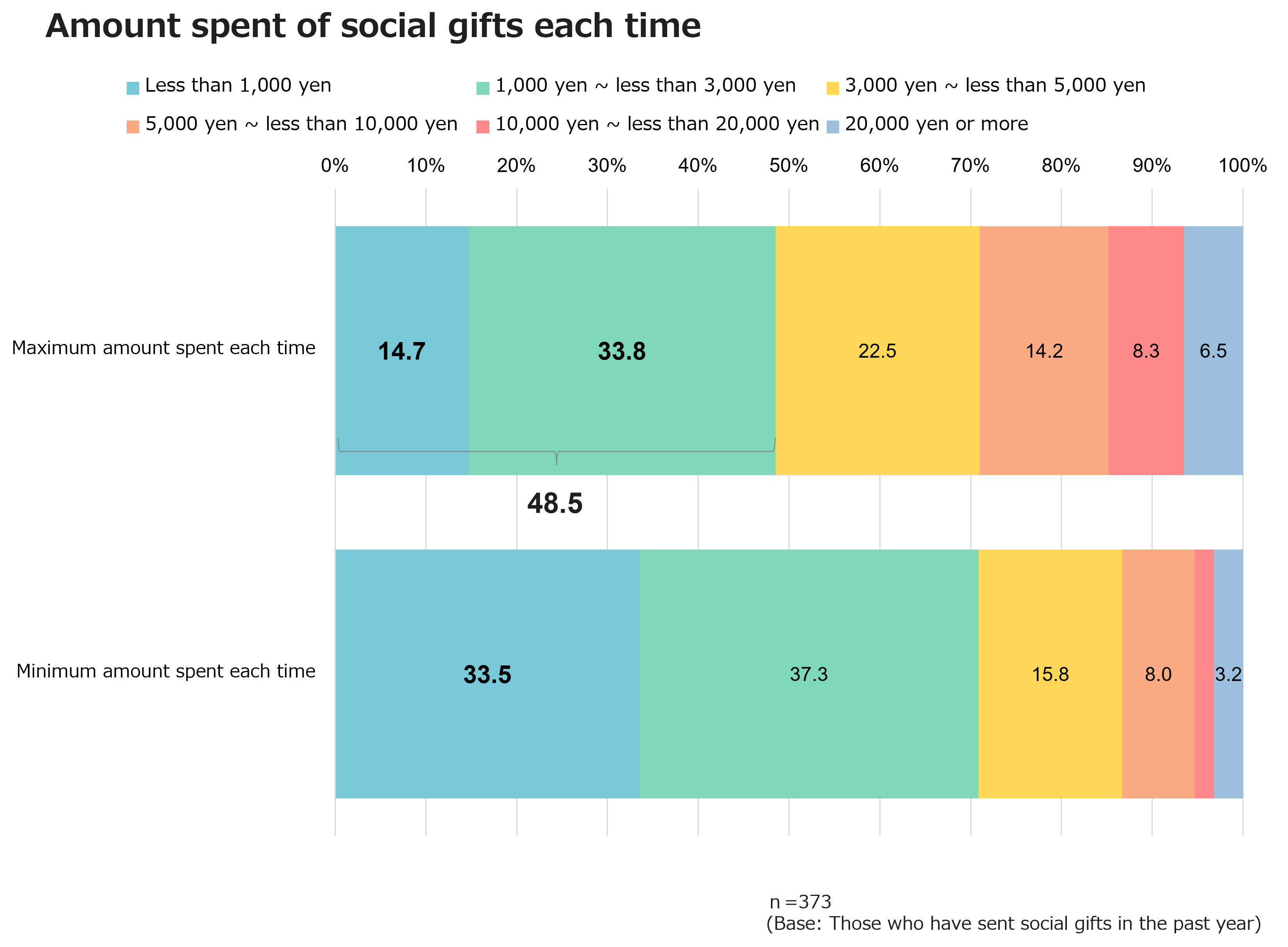
We next asked people who had given social gifts about the maximum and minimum amount they would spend per gift (Fig.6). The maximum amount they would spend per social gift would be less than 3,000 yen for 48.5% of people. The minimum amount would be “less than 1,000 yen” for 33.5%, so people are thus surmised to find it easy to casually give “Gift cards (Food)” less than 1,000 yen.
Fig.6
4. Reasons for giving social gifts/How products are chosen
Reasons for giving social gifts
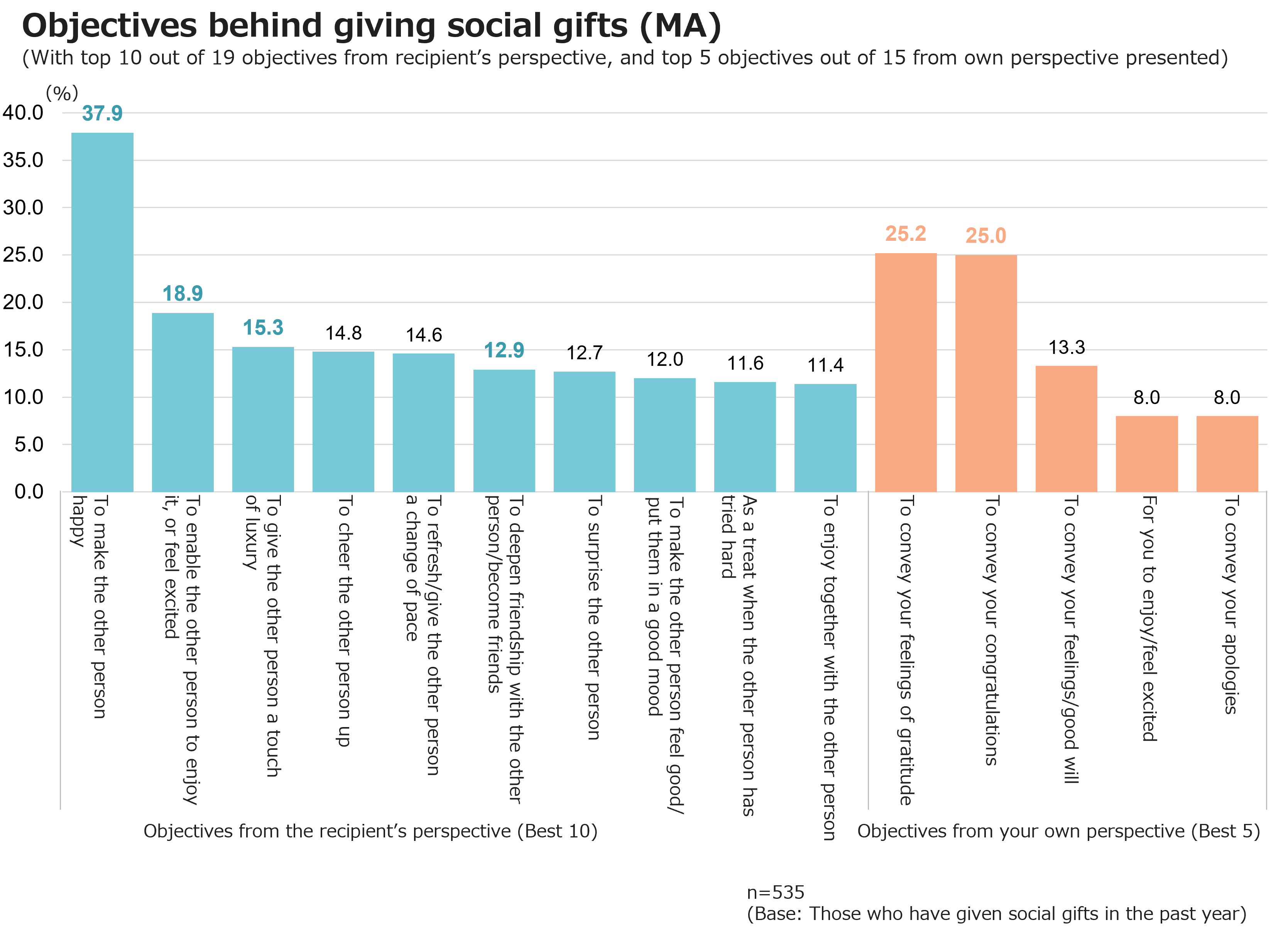
There are two types of reasons for giving social gifts: a “reason from the recipient’s perspective” or how you want the other person to be, and a “reason from your own perspective”, or how you want to be, through giving a gift. We next investigated why social gifts are given. The top responses with “reasons from the recipient’s perspective” were “To make the other person happy” at 37.9%, “To enable the other person to enjoy it, or feel excited” at 18.9%, and “To give the other person a touch of luxury” at 15.3%, with how they want the other person to feel the reason for giving the gifts. There were also cases where the reason was to deepen bonds with the other person, such as “To deepen friendship with the other person/become friends” at 12.9%. Among the “reasons from your own perspective”, social gifts were used as a means to convey one’s sentiments to the other person, such as “To convey your feelings of gratitude” at 25.2%, and “To convey your congratulations” at 25.0%.
Fig.7
How social gifts are chosen
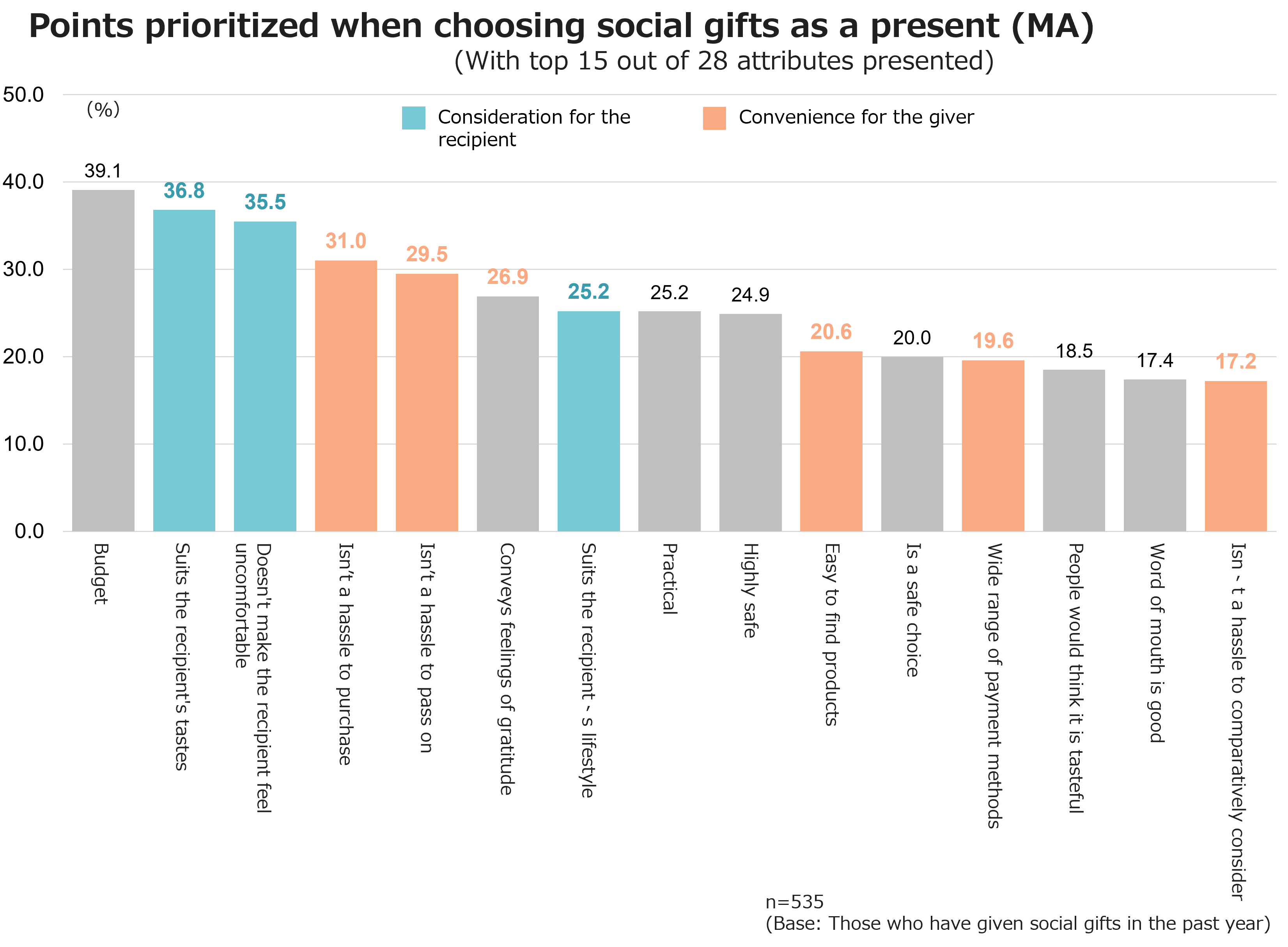
Next, what sorts of points do givers prioritize when choosing products when giving social gifts? The top priorities were divided into “consideration for the recipient”, and “convenience for the giver” (Fig.8)
Fig.8
In terms of “Consideration for the recipient”, “Suits the recipient’s tastes” rated 36.8%, “Not making the recipient feel uncomfortable” rated 35.5%, and “Suits the recipient’s lifestyle” rated 25.2%, indicating they choose social gift products with consideration for the recipient. In terms of “Convenience for the giver”, the top responses were “Isn’t a hassle to purchase” at 31.0%, “Isn’t a hassle to pass on” at 29.5%, “Is easy to find products” at 20.6%, “Wide range of payment methods” at 19.6%, and “Isn’t a hassle to comparatively consider” at 17.2%, indicating the convenience of being able to give a gift speedily without hassle when the idea strikes is with gifts in everyday life is a priority when choosing products. Gift cards, which are often used as social gifts, meet the “needs of the recipient” in the recipient being able to exchange them for things they like at a timing they like. In addition, the fact they are purchasable online, and can be passed to the recipient via mail or social media meets the “convenience for the giver”. Gift cards can be said to be products that meet the needs of both recipients and givers.
5. Summary
The growing popularity of social gifts has the characteristics of being “easy to give” (not a hassle) and “casually usable” (due to their low unit price) for givers, as well as being “easy to use” (offering the ability to choose a product they like at a timing they like) and “conveying the giver’s gratitude” (without making them overly uncomfortable) for recipients. Social gifts are used mainly by young people as a casual want to convey their sentiments due to this convenience. It is probably due to the fact young people are digital natives and constantly “connected with people” via social media, that they see the value in social gifts. In addition, by adding social gifts to greetings when thanking people, offering support, and celebrating events, people are likely to become more conscious of their connection with the other person, even if they are far away. The use of social gifts has the potential to spread to a wide range of generations in future, as a means of communication between busy businesspeople and family/friends who live far away, and is deemed to have great potential demand.
<Research Outline> Research Area: Nationwide, Japan Respondent Criteria: 15 ~ 59-year-old men and women Sample Extraction Method: Eligible extracted from Mighty Monitor Sample Size: Screener n=5002s : Gathered in line with gender and age group composition according to regional population composition Main questionnaire (social gift ever users) n=535s : Allocated by gender and age group based on screener results Weight-back tabulation: None Survey Implementation Period: (Thu) 9th May, 2024 ~ (Tue) 14th May, 2024
<Authors> Researchers engaged in different industries collaborated on the theme of “social gifts”, jointly planning and analyzing the survey.
◆This report is copyrighted by INTAGE Inc. Please check the following prohibitions and precautions, and specify the source when reproducing or quoting this report. “Source: INTAGE “Knowledge Gallery” article published MM/DD/YYYY article”
◆The following are prohibited: ・Alteration of this article in full or in part ・Sale or publication of this article in full or in part ・Uses that are against public order and morality, and uses connected with illegal activities ・Reproducing or quoting panel data* for the purpose of advertising or promoting companies, products, or services *Panel data include: SRI+, SCI, SLI, Kitchen Diary, Car-kit, MAT-kit, Media Gauge, i-SSP, etc.
◆Other precautions: ・INTAGE Inc. shall not be liable for any trouble, loss, or damage caused by the use of this report ・These usage rules do not restrict the use of quotations or other uses permitted under the Copyright Act of Japan
◆For inquiries about reproduction and quotation, click here